
Cheap cookware for a first apartment: what to buy first
Cheap cookware for a first apartment: the short list of pans, pots and tools to buy first, what to buy used, and what to wait on until you need it.
Manon Lambert6 min read
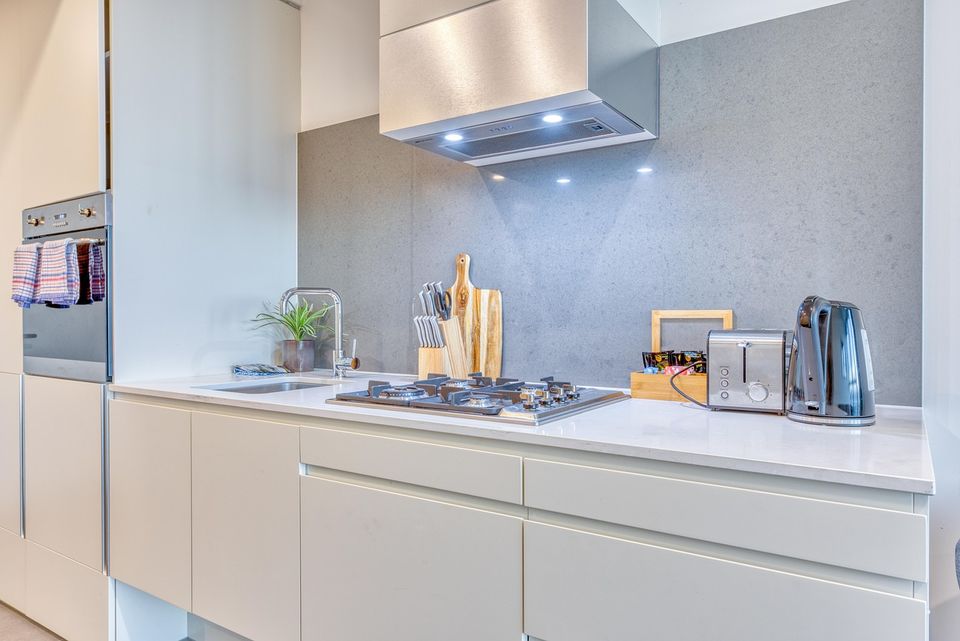
You do not need a 20-piece set to cook in your first place. You need about five pieces, and you can often get them for less than the price of one boxed set.
Here is the short list, in the order to buy it. Plan on roughly one skillet, one saucepan, one pot, one sheet pan and a few tools.
What to buy first
| Piece | Why | New or used |
|---|---|---|
| 10 to 12 inch skillet | Eggs, stir-fry, meat, vegetables | Nonstick new, stainless or cast iron used |
| 2 to 3 quart saucepan with lid | Rice, pasta sauce, oats, reheating | New or used |
| 6 to 8 quart pot | Pasta, soup, chili | New or used |
| Half sheet pan | Roasting, baking, cookies | New, cheap and simple |
| Kitchen tools | Spatula, wooden spoon, tongs, knife | See below |
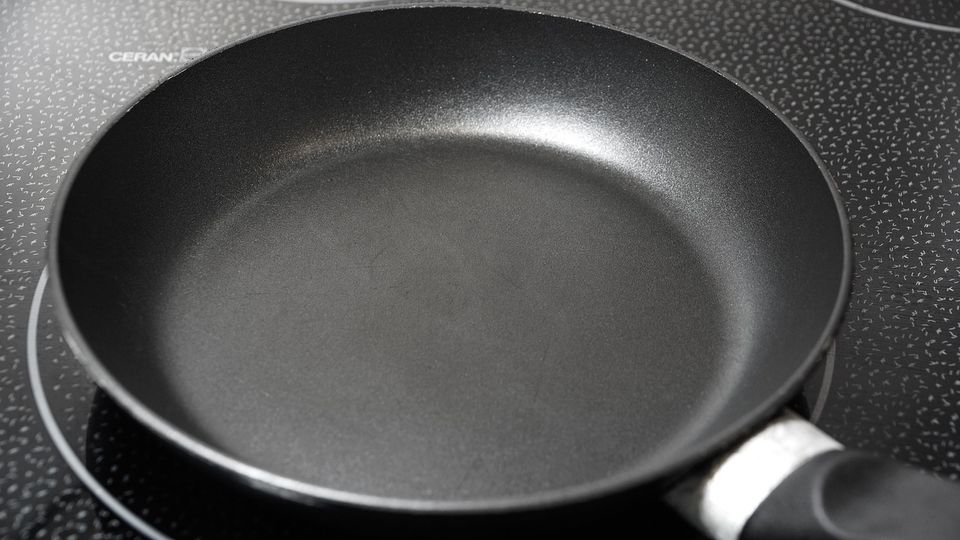
That is it for most meals. A cooking plan that needs more can wait until you actually cook it.
Ruling: buy the five pieces. Skip the rest until a recipe asks for it.
Why not a set?
A boxed set looks like a deal because the per-piece price is low. But many pieces are lids, tiny pans or sizes you never use. Our guide on three pans beat a 12-piece set covers this in more detail.
Example numbers only:
| Plan | Cost | Pieces you use |
|---|---|---|
| Boxed 12-piece set | $100 | 4 of 12 |
| Five chosen pieces | $90 | 5 of 5 |
Same money, but the second plan gives you pieces that fit what you cook.
Ruling: buy by use, not by count.
Which material for a first kitchen?
- Nonstick. Easy for eggs and fish. Cheap. Does not last forever. Avoid metal tools, and do not use high heat. Replace when the coating wears.
- Stainless steel. Lasts for years and handles high heat. Food can stick until you learn to preheat and use oil.
- Cast iron. Lasts for decades, cheap to buy and good to find used. Heavy, and it needs a little care.
- Aluminum. Light and cheap, good for sheet pans.
For a first skillet, a nonstick pan is the easiest to use. Add a stainless or cast iron pan later when you want to sear and brown. Follow the maker's care and heat guidance on any nonstick pan.
Ruling: nonstick first, stainless or cast iron second.
What to buy used
Cookware is one of the best things to buy used. Look at thrift shops, yard sales and online listings.
Good used buys:
- Cast iron. Rust can be removed, and old pans often have a smooth surface.
- Stainless pots and pans with solid bases.
- Sheet pans and baking dishes.
- Glass baking dishes without chips.
Skip used:
- Nonstick pans with scratches or peeling.
- Anything with cracks, deep dents or loose handles.
- Cheap pans with warped bottoms. They rock on the stove.
See when secondhand beats new for the full check.
Ruling: buy used for steel and iron, new for nonstick.
The tools to add
Tools are cheap and used daily:
- A spatula and a wooden spoon.
- Tongs.
- A chef's knife and a cutting board. Kitchen tools worth owning covers which to spend on.
- A colander or strainer.
- A can opener and a vegetable peeler.
- A set of measuring cups and spoons.
You can skip a blender, a food processor and a stand mixer until you cook enough to need one.
Check before you pay
- Does the pan sit flat on your stove? Gas, electric and induction work differently. If you have induction, the pan must be magnetic.
- Is the handle secure and oven-safe if you want to use the oven?
- Does it fit your storage? Small kitchens run out of space fast.
- Is the lid a good fit?
- Does it have a return window?
Where the answer flips
If you cook for a family or meal-prep large batches, you will want bigger pans and more pots. If you mostly microwave, spend less, and skip the pot.
If you have a friend or relative with spare cookware, take it. A spare pan for free beats any sale.
Common mistakes
- Buying a big set for the look of a full kitchen.
- Using metal tools on nonstick.
- Cooking on high heat all the time. Medium is enough for most things.
- Buying pans that do not match your stove type.
- Not washing new pans before use.
A starter plan by the month
You do not have to buy it all at once. Space it out and you will learn what you need.
Week one. A skillet, a saucepan and a knife. You can make eggs, rice, pasta and a simple stir-fry.
Month one. Add the large pot and a sheet pan. Now you can make soup, roast vegetables and bake.
After three months. Look at what you reach for. If you keep wishing for something, such as a lid that fits or a baking dish, buy that one thing.
Example numbers only: five core pieces at an average of $18 each is $90. Add $30 for tools. That is $120 to cook almost anything for years.
Ruling: buy the next piece only when you miss it.
Care that stops you buying twice
- Wash nonstick by hand with a soft sponge.
- Let a hot pan cool before it touches cold water, as sudden changes can warp it.
- Dry cast iron right away and rub on a thin film of oil.
- Do not stack pans without a cloth between them if the surface scratches.
- Check handles every so often for loose screws.
Quick questions
What pots and pans do I really need?
A skillet, a saucepan, a larger pot and a sheet pan cover most meals.
Is cast iron good for beginners?
It can be. It lasts for decades and is cheap, but it is heavy and needs some care. Start with a nonstick pan if you want the easiest option.
Should I buy nonstick or stainless?
Both have a role. Nonstick suits eggs and easy cleanup. Stainless suits browning and lasts longer.
Is it okay to buy used pans?
Yes for steel, iron and glass if they are in good shape. Skip nonstick that is scratched.
More to read
Keep reading
Three pans beat a 12-piece cookware set
Why buying three good pans one at a time usually beats a big cookware set, with a simple comparison of stainless, nonstick and cast iron.
Manon Lambert3 min read
Cheap blender: what to check before you buy one
Buying a cheap blender? Check the motor, jar material and blade design first. Here is what a budget blender can and cannot do, and when to skip it.
Manon Lambert3 min read
Cheap vs expensive kitchen knife: what the extra money buys
Cheap vs expensive kitchen knife: a mid-price chef's knife and a honing steel beat a pricey set for most home cooks. Here is where the money matters.
Manon Lambert4 min read
Kitchen tools worth owning, and gadgets to skip
A short list of kitchen tools worth owning, from a chef's knife to an instant-read thermometer, plus the single-job gadgets that clutter your drawer.
Manon Lambert3 min read
Toaster oven vs toaster: which one earns its counter space
Toaster oven vs toaster: a toaster is cheaper and faster for bread, a toaster oven does more jobs. Here is which to buy based on how you cook.
Hamza Idrissi3 min read
Cleaning supplies you actually need (and 6 you can skip)
Cleaning supplies you actually need are fewer than the aisle suggests. Here is a short list for a home, plus six products that are usually a waste of money.
Manon Lambert4 min read